
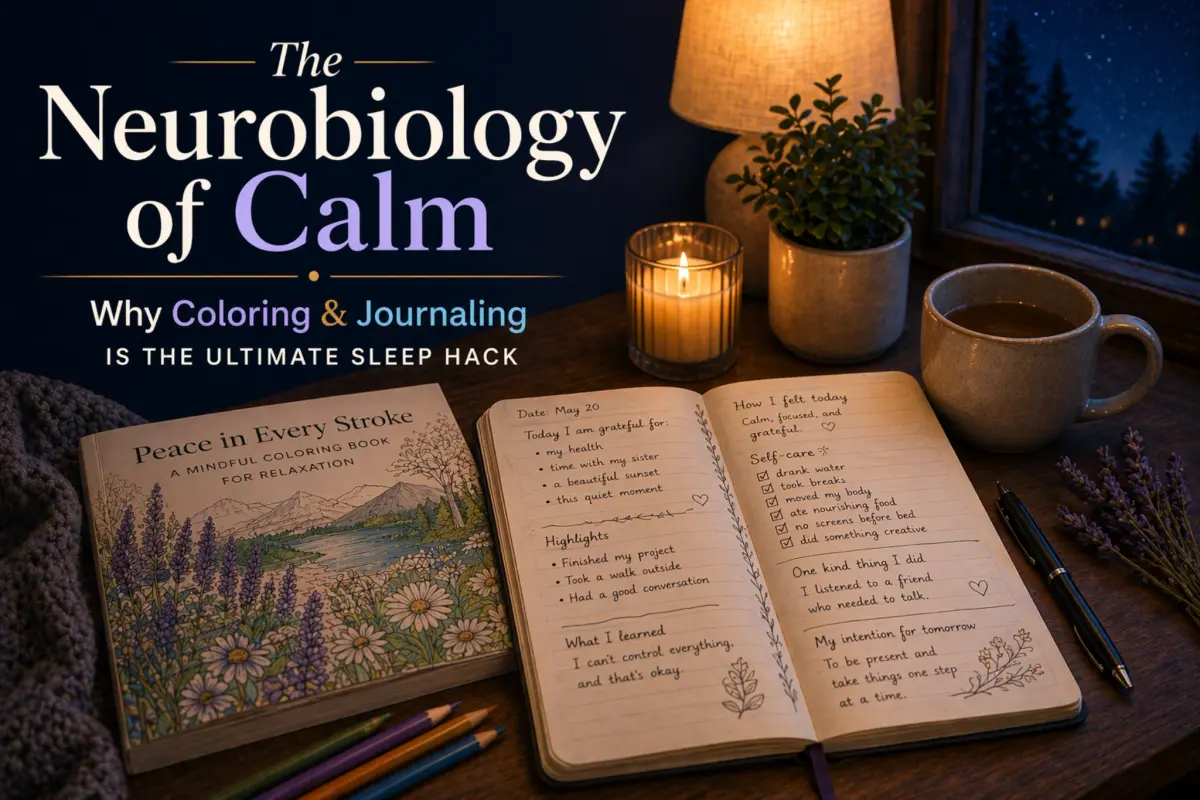
🧠 The Science of "Cognitive Shuffling"
When you color, your brain performs what psychologists call Cognitive Shuffling. By focusing on low-stakes visual tasks, you prevent the brain from entering "problem-solving mode." This lowers your Cortisol (stress hormone) and boosts Melatonin production by avoiding the blue light of screens.
Step 1: The Evening Coloring Session (15 min)
Coloring acts as a form of "active meditation." Unlike traditional meditation, which can be frustrating for beginners, coloring gives your mind an anchor.
Choosing Your Tools for Bedtime
| Tool | Vibe | Why for Bedtime? |
|---|---|---|
| Colored Pencils | Soft / Tactile | The sound of the wood is ASMR-friendly and relaxing. |
| Watercolors | Flowing / Slow | Encourages patience and "letting go" of control. |
| Soft Markers | Bold / Satisfying | Great for quick, vibrant sessions without hand fatigue. |
📅 The 7-Day "Better Sleep" Challenge
Try this sequence for one week to reset your internal clock:

100 Flowers: Your Nightly Companion
Thick, bleed-resistant paper designed for colored pencils. No bleed-through, just pure relaxation.
🛒 View on AmazonStep 2: The 3-2-1 Gratitude Journaling Method
To avoid "blank page syndrome," use this structured approach every night:
- 3 Small Wins: (e.g., "Had a great coffee," "Finished a task early").
- 2 People: Who made your day better?
- 1 Goal for Tomorrow: Write it down to "offload" it from your brain.
🎁 Want to try it tonight?
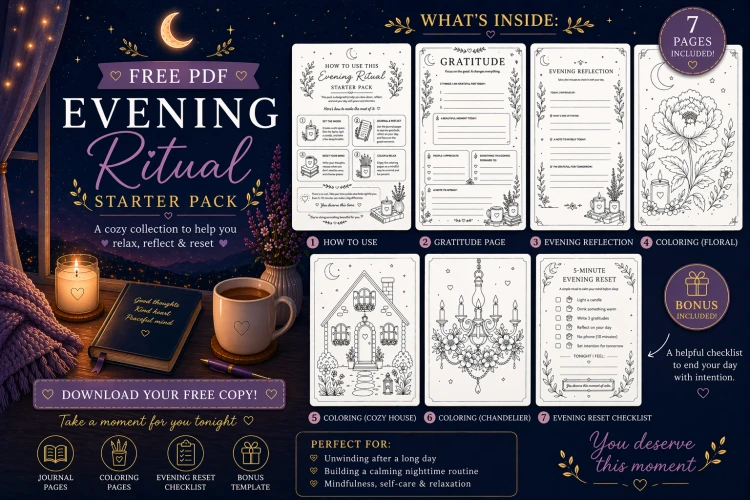
Download our "Evening Ritual Starter Pack" (PDF). Includes 3 relaxing flower pages and a guided journaling template.
📥 Download Free Starter Pack💡 Expert Tips for a Supportive Night
- The "Cool Down": Your body needs to drop 1°C to sleep. Color in a cool room.
- No Perfectionism: If you color outside the lines, celebrate it. It's a sign of a relaxing brain.
- The Scent Factor: Light a lavender candle only during your coloring time to create a "sensory trigger" for sleep.